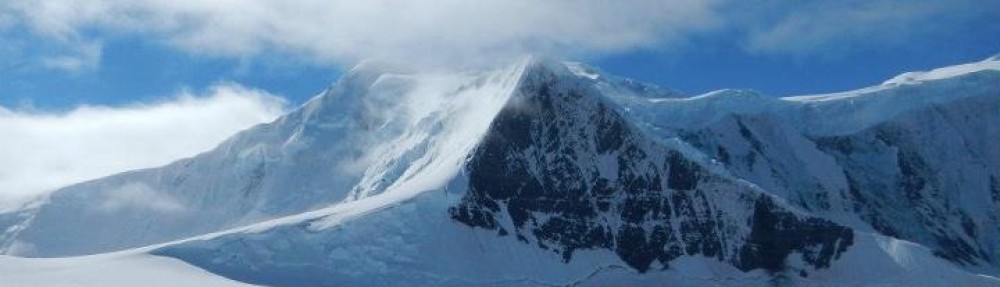

I have written at least eight different blog posts in my head reflecting on my recent experience skiing in the Chilean Andes, but this one today honors the beauty of how adventure – and the challenges and triumphs resulting from it – can connect to your everyday professional and personal life.
As I met with a colleague this morning we discussed hopes and anxieties for the year ahead. It quickly became an interesting discussion on the role of fear, which can either paralyze & consume you or fuel your change and growth. We discussed whether or not communicating about nervousness and fears was worthwhile or counterproductive. Similarly, we moved into a discussion about support and professional growth and how to accept both compliments and constructive feedback with grace and confidence. In both these conversations I found myself having one of those classic light bulb “A-HA!” style moments and sharing anecdotes from my recent skiing experience with PowderQuest.
Fear – Work With & Through It
It was not until halfway through my trip that my trip-mates and guides knew that I had never been off-piste skiing before. I was not actively trying to hide this information, but neither did I volunteer it. I stood at the top of varying levels of backcountry chutes and bowls with fear pounding in my chest. And I held that alone. I don’t think that made me brave. It made me isolated. It wasn’t until a particularly long and harrowing day that I finally said “I have never done this before, I am terrified.” It was only then that the women on the trip were able to more fully be the amazing women they are in support of me. It was only then that Ingrid Backstrom & Leah Evans could really put their expertise and coaching talent to maximal use. I was able to get the help I needed to become a better, braver skier because I wasn’t trying to hide what was going on inside. In our professional and personal lives I think we tend to connote fear with cowardice. Fear is neither brave nor cowardly. Fear is a rationale response to risk, to uncertainty, to the new. Whether you are standing at the cusp of a narrow snow-covered chute flanked by rocks or on the cusp of a new job, a changing relationship, or something else big or small….I am more certain then ever that if you find the right people to share your fear with that you will find yourself capable of more than you imagined.
Spanish Sausage – Love It & Yourself
Midway through our trip, Leah & Ingrid turned to our group of beautiful, smart, talented, and successful skier chicks who were ripping up the slopes and made the following pronouncement:
“Here’s the deal. For the rest of the day if you say anything negative about your skiing or yourself you have to stop at the entrance to the lift, raise your hands in the air, do a dance, and yell ‘ME GUSTA LA LONGANIZA CHILENA!”
Meaning, “I LOVE CHILEAN SAUSAGE!” This certainly gave the lift operators a good chuckle. Many of us had to do this, sometimes multiple times, and even our superstar guides Ingrid & Leah were not exempt…going to show the pervasive problem we (and I think particularly women) have with two things:
- Accepting compliments without using self-deprecation or criticism to deflect them. Instead of saying an authentic “Thank you” we instead resort to the “Yes, but….” Or “Except for when…” We assume that compliments are just the sweet tasting, disingenuous preface to what someone else really means which is the criticism that is sure to follow (or secretly lurking within them).
- Absorbing feedback as a growth opportunity rather than a devaluation of our skills, talents, or self-worth. We are the first to say “Nobody is perfect, and I certainly am not” and so susceptible to crumbling inwardly upon receiving suggestions for improvement.
Sure, some people will compliment you in order to wound you. Some people will give feedback that is not constructive and leaves you feeling scraped out inside. But we all know how to differentiate between THOSE people and the allies and supporters around us who mean what they say.
So….whether on a ski slope, in your office, or at home….WHAT IF?
What if we chose to live with our fear instead fighting the impossible fight to live without it?
What if we chose to let fear propel us to new heights alongside those who can champion us along the way?
What if we chose to accept gratitude and compliments with a smile and earnest thanks?
What if we chose to hear feedback with an open mind and heart rather than disappointment and self-criticism?
What could we then be capable of – independently and together?

 K.I.S.S. (Keep It Simple, Schilly)